
Around 75% of adults don’t meet daily water needs, and dehydration can cut exercise performance and mood within hours. You’ll perform better when fluids sustain plasma volume, regulate temperature, and support nutrient transport, all of which shape energy and focus. Hydration also stabilizes cognition and alertness, aiding decision-making under stress. Balanced strategies—pre-load, steady intake during activity, and post-exercise rehydration—help preserve vitality across demanding days, so you’ll want to consider how you hydrate now.
Key Points
- Hydration maintains plasma volume and thermoregulation, supporting workout capacity and daily alertness which influence overall vitality.
- Adequate fluids sustain cognitive function (attention, reaction time, working memory) important for decision-making and safety.
- Proper hydration stabilizes mood and may support endocrine signaling, including testosterone-related energy and perceived vigor.
- Strategic fluid timing (pre-, during, and post-exercise) maximizes energy, reduces fatigue, and speeds recovery.
- Monitoring urine cues and adjusting intake helps sustain daily energy, focus, and resilience across activities.
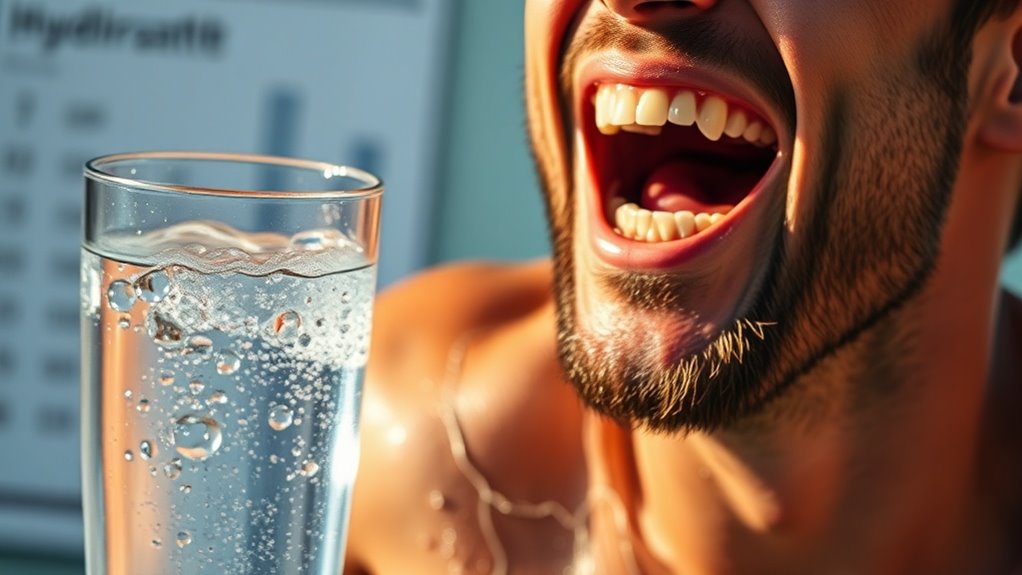
Hydration plays a pivotal role in men’s essential by supporting physical performance, cognitive function, and overall energy levels. When you consider hydration, you’re not just quenching thirst; you’re sustaining plasma volume, thermoregulation, and nutrient transport that underwrite workout capacity and daily alertness. In clinical terms, adequate fluid status supports stroke volume and reduces perceived exertion during moderate and high-intensity activity. You’ll also notice that cognitive tasks—attention, reaction time, and working memory—tend to stay steadier when hydration is maintained, which matters for work, decision-making, and safety in demanding environments.
Hydration supports performance, cognition, and daily energy by sustaining plasma volume and thermoregulation.
From a physiologic standpoint, fluid balance interacts with endocrine signaling, particularly testosterone, which can influence muscle mass and mood. Hydration and testosterone may have a bidirectional relationship: dehydration can elevate cortisol and falsely lower perceived vigor, while adequate hydration supports metabolic processes that underlie testosterone’s effects on performance. You don’t need dramatic shifts to benefit; even small improvements in hydration status can enhance recovery between sets, reduce muscle soreness, and stabilize energy dips after training.
When you think about fluid intake timing, you optimize utility and minimize delays in performance. Begin with pre-exercise hydration to maximize plasma volume and maintain mental sharpness during the initial minutes of activity. A moderate pre-load—roughly 400 to 600 milliliters about two to three hours before you start—accounts for gastric emptying and urine output patterns in most adults. If you’re exercising in hot or humid conditions, extend this window and increase intake to maintain euhydration. During activity, sip fluids at regular intervals rather than waiting for thirst, aiming for 150 to 300 milliliters every 15 to 20 minutes for sessions under an hour, and adjust upward for longer or hotter workouts. Post-exercise rehydration should prioritize restoring body weight lost via sweat; for every kilogram of body mass lost, replacement with about 1.0 to 1.5 liters of fluid is reasonable within the next few hours, alongside electrolytes if sweat losses are high.
Your hydration strategy should also reflect daily patterns. If you train in the morning, you’ll benefit from a hydration plan that carries into post-work recovery, including a quick fluid and electrolyte-rich option before breakfast. For sedentary days, distribute fluid intake across meals to support kidney function and cardiovascular stability. Choose water as the baseline, with modest additions like low-fat dairy or a small serving of electrolyte-containing beverages in hot climates or during extended training. In all cases, monitor urine color and frequency as practical proxies for status, while recognizing that fever, vomiting, or diarrhea necessitate individualized rehydration targets and, if needed, clinician guidance. Hydration and testosterone, and fluid intake timing, together influence vitality by preserving performance, mood, and metabolic balance across daily life.
Common Questions
Do Electrolytes Significantly Affect Hydration and Vitality?
Electrolytes do vital affect hydration and vitality when balance is off. You’ll optimize fluid status by maintaining electrolyte balance, especially sodium, potassium, and magnesium, which support cellular function and nerve signaling. Hydration timing matters: sip with activity, replace losses quickly, and avoid overhydration. For sustained energy, pair fluids with electrolytes during workouts or heat exposure. Monitor urine color and thirst, aiming for light, pale urine and steady performance. If cramps or dizziness persist, seek clinical guidance.
Can Dehydration Occur During Sleep and Affect Morning Energy?
Yes, dehydration can occur during sleep and affect morning energy. You may notice grogginess, headache, or reduced alertness if you wake up underhydrated. Overnight water loss, especially with high room temps or alcohol, lowers plasma volume and impairs cerebral perfusion, diminishing morning energy impact. Stay hydrated before bed and consider a light, balanced intake if you wake thirsty. Monitor symptoms with objective cues like concentration and sleep quality to guide adjustments.
Does Hydration Impact Testosterone Levels Directly?
No—hydration doesn’t directly cause a large, immediate plunge in testosterone. Your levels stay relatively stable, but dehydration can impair mood, cognitive function, and exercise performance, which may indirectly feel like lower vitality. Maintain adequate fluids; some studies suggest mild improvements in perceived energy with normalization. Does testosterone directly decline with dehydration, and can hydration boost testosterone levels? Evidence isn’t strong for direct hormonal swings, but optimal hydration supports overall hormonal balance and physical function.
How Much Water Is Optimal for Athletes vs. Sedentary Men?
Optimal water needs vary: athletes typically require more due to sweat losses, while sedentary men need baseline intake. A practical guideline is about 2–3 liters daily for many adults, with athletes adding 0.5–1 liter per hour of training, adjusted for sweat rate. Prioritize hydration timing around workouts and meals, and assess fluid palatability to encourage intake. Monitor urine color and performance; avoid overhydration. Tailor amounts to individual physiology and climate.
Can Hydration Improve Mood and Cognitive Function Quickly?
Yes—hydration can boost mood and sharpen thinking fairly quickly. You’ll notice subtle relief from irritability and quicker recovery of focus within minutes to an hour after drinking water. Hydration mood benefits relate to improved plasma volume and brain perfusion, reducing quick cognitive fog clarity issues. Keep intake steady, and prioritize electrolytes if you’re sweating heavily. In practice, a small, consistent amount throughout the day supports cognitive performance and overall mental well-being.