
Did you know that small, daily shifts in breath can recalibrate your body’s hormonal clock? Meditation lowers stress-driven HPA activity, so cortisol and catecholamines ease, while inflammatory signals that blur endocrine function fade. With regular practice, autonomic balance improves, sleep deepens, glycemic control sharpens, and circadian rhythms stabilize, shaping melatonin and metabolic hormones. You’ll notice behavioral changes too—more activity, mindful eating, steadier routines—but the real effects unfold gradually, inviting you to explore how these threads connect in your own physiology.
Key Points
- Meditation reduces HPA axis activation, lowering cortisol and catecholamines to support endocrine balance.
- Mindful breathing enhances parasympathetic dominance, smoothing stress responses and stabilizing circadian-related hormones.
- Daily practice routines align sleep, meals, and activity, improving insulin sensitivity and metabolic hormone signaling.
- Increased body awareness and behavior regulation promote healthier lifestyle choices that favor leptin, adiponectin, and weight stability.
- Repeated stress reduction improves hormonal rhythms (cortisol slope, melatonin) and may support testosterone and LH pulsatility.
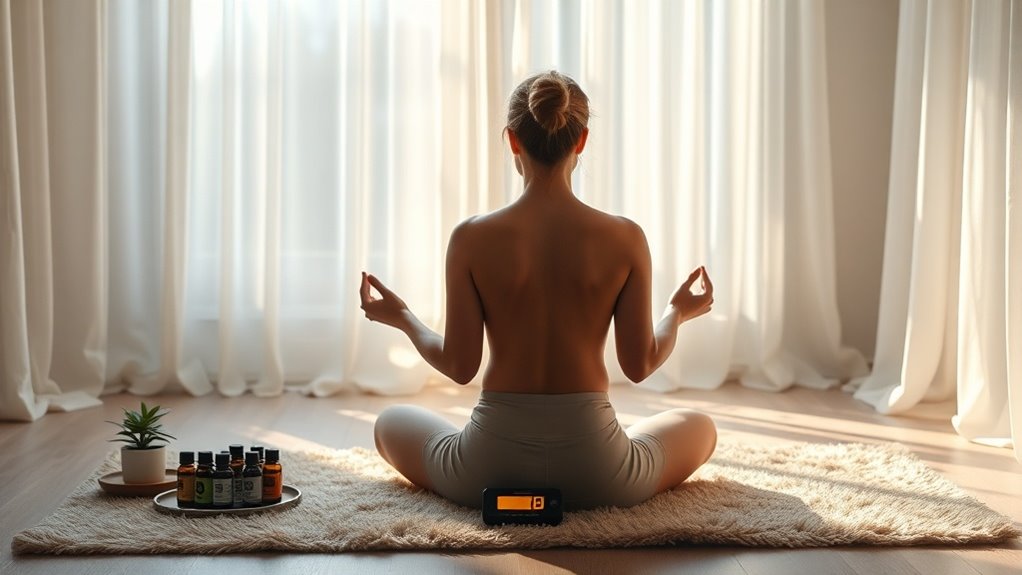
Meditation can play a meaningful role in hormone balance by reducing stress, enhancing autonomic nervous system regulation, and supporting healthier lifestyle choices that influence endocrine function. You’ll discover how a structured practice can modulate the hypothalamic-pituitary-adrenal axis, improve circadian alignment, and influence metabolic signals that govern ovarian, testicular, and thyroid function. The evidence base spans randomized trials, meta-analyses, and mechanistic studies showing that regular practice lowers cortisol and catecholamines, reduces inflammatory markers, and improves glycemic control. In practical terms, these changes can translate to steadier energy, clearer mood, and more predictable menstrual, ovulatory, or adrenal responses—important markers for overall hormonal stability.
Meditation supports hormonal balance by reducing stress and refining autonomic regulation.
You’ll begin with mindful breathing as a foundational skill. This technique isn’t merely relaxation; it directly informs stress regulation by shifting autonomic balance toward parasympathetic dominance and dampening sympathetic overdrive. When you cue slow, diaphragmatic breaths and maintain an extended exhale, you reduce sympathetic arousal and lower circulating cortisol. Over weeks, this pattern may sharpen resilience to stressors, attenuate morning cortisol spikes, and support sleep architecture. Because sleep and circadian rhythm exert strong control over melatonin, cortisol, and metabolic hormones, mindful breathing becomes a practical lever for aligning endocrine rhythms with daily demands.
Concretely, you’ll integrate brief practices into daily life: a five-minute seated session in the morning, a breathing check-in during breaks, and a short wind-down routine before bed. These micro-moments reinforce stress regulation and create consistency, which researchers associate with more stable cortisol slopes across the day and improved insulin sensitivity. In parallel, engagement with breath-based techniques can reduce perceived stress, which is itself linked to better luteinizing hormone pulsatility and testosterone regulation in susceptible individuals. The cumulative effect is not a single miracle change but a cascade of smaller, repeatable adjustments that support endocrine coherence.
Beyond breath work, meditation cultivates attention to body signals and behavior. This heightened awareness encourages healthier lifestyle choices, including regular physical activity, balanced meals, and time-aligned sleep. Each of these factors exerts independent and synergistic effects on hormonal homeostasis. For example, modest weight maintenance and exercise influence leptin and adiponectin signaling, while structured sleep stabilizes cortisol and growth hormone patterns. Your practice also frames thoughts and emotional responses more lucidly, reducing avoidance patterns that disrupt routine and elevate stress.
Common Questions
Can Meditation Target Specific Hormones Directly?
Directly, meditation doesn’t target specific hormones with surgical precision, but it can influence them through systemic pathways. By reducing stress, you modulate HPA axis activity, potentially shifting cortisol and adrenaline patterns, and over time may support balanced thyroid, insulin, and reproductive hormones. These directed hormone effects arise via improved autonomic balance and neuroendocrine regulation. Meditation mechanisms include lowered inflammatory markers and enhanced vagal tone, contributing to a more harmonious endocrine profile. You practice, you influence, you optimize.
How Long Before Hormones Change With Meditation?
You start noticing changes in weeks to a few months, as quiet practice reshapes stress responses and sleep. Think of hormone timing aligning gradually with your circadian rhythm through consistent meditation effects. You may feel steadier moods and better energy as cortisol and adrenaline modulation integrates with aging hormones. Results vary by routine, intensity, and baseline health, so patience matters. Stay consistent, track patterns, and consult a clinician if concerns arise about persistent imbalances.
Is Mindfulness Better Than Mantra for Hormones?
Mindful vs. mantra isn’t about absolutes; the best choice depends on you and your physiology. For hormone-focused meditation, evidence suggests both can help, with mindfulness cultivating interoceptive awareness and stress reduction, while mantra may modulate autonomic arousal and breathing patterns. In practice, you can blend approaches to optimize outcomes. Try a brief mindful check-in, then a mantra cycle, and monitor mood, sleep, and energy to see what supports your body’s hormonal balance.
Do Age or Gender Affect Meditation’s Hormonal Impact?
Age effects and gender effects do influence a meditation’s hormonal impact, but not in a simple, one-size-fits-all way. You may find varied cortisol, insulin, and gonadal hormone responses across age groups and between sexes. Rigorous evidence suggests posture, practice duration, and baseline stress matter more than birth year or gender alone. Integrate personalized pacing, monitor symptoms, and adjust intensity to optimize hormonal balance while remaining evidence-based and consistently mindful.
Can Meditation Replace Medical Treatment for Imbalances?
No, meditation can’t replace medical treatment for imbalances. You should pursue clinical care when hormones are out of range, using it alongside evidence-based approaches. In your plan, consider meditation vs treatment as a complementary strategy rather than a substitute, aiming to support hormone balance outcomes alongside prescribed therapies. Stay engaged with your clinician, monitor symptoms, and integrate mindfulness, stress reduction, and lifestyle changes to optimize, but not replace, medical recommendations.