
Adding more healthy fats to your plate can support brain function, hormone balance, and steady energy, without spiking hunger. You’ll notice better mood regulation and nutrient absorption when you pair fats with fiber and protein. Prioritize olive oil, avocados, nuts, seeds, and fatty fish to improve your lipid profile and curb inflammation. It’s a sustainable shift that replaces refined carbs, fueling your day with lasting energy—so what might you try first to start benefits sooner?
Key Points
- Healthy fats support brain function, hormones, and cell membranes, improving overall body function.
- Omega-3 and monounsaturated fats can improve lipid profiles and reduce inflammation.
- Replacing refined carbs with healthy fats aids heart health and sustained energy.
- Healthy fats enhance nutrient absorption and help with satiety and appetite control.
- Prioritizing quality fats in a balanced plate promotes long-term, sustainable health benefits.
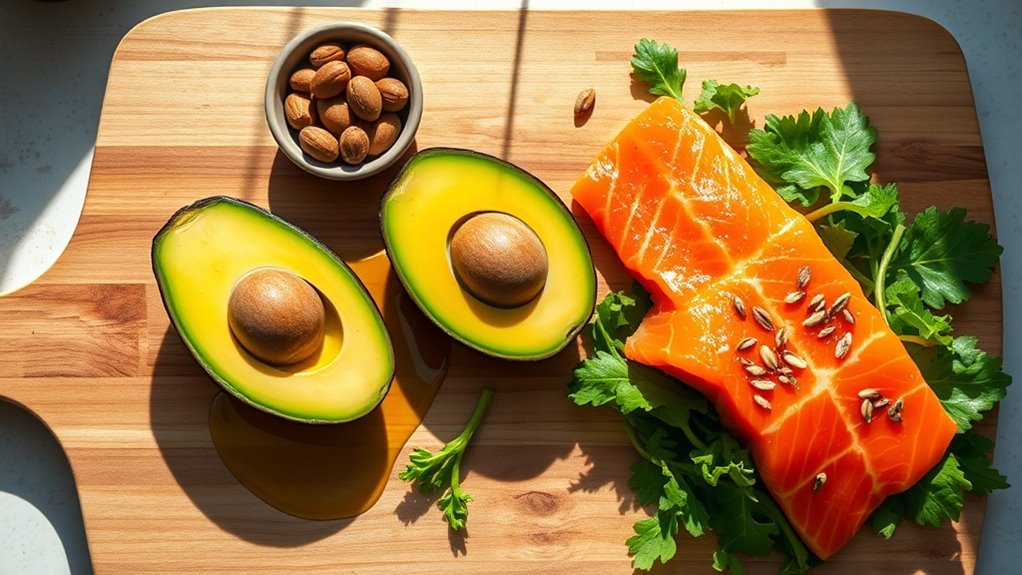
Curious how adding healthier fats can boost your well-being? You’re about to learn how your daily choices can influence energy, mood, and long term health. Healthy fats aren’t just flavor boosters; they’re essential building blocks for your brain, hormones, and cell membranes. When you choose quality sources—olive oil, avocados, nuts, seeds, fatty fish, and certain dairy—you support steady energy, satiety, and nutrient absorption. Unlike high-sugar snacks, healthy fats help you feel fuller longer, reducing overeating and spikes in blood sugar.
Healthy fats fuel energy, mood, and long-term health with quality sources and balanced portions.
You’ll notice that fats aren’t the enemy. They’re a central part of a balanced diet. The evidence consistently shows that including healthy fats can improve lipid profiles, provide anti-inflammatory benefits, and support heart health when consumed in place of refined carbohydrates and processed fats. It’s not about slashing fat entirely; it’s about choosing the right fats and balancing your plate. For most people, a shift toward monounsaturated and omega-3-rich fats yields meaningful advantages for daily functioning and long term health.
In practical terms, aim for variety and moderation. Start by drizzle or swap: olive oil for some of your cooking fat, add a handful of nuts as a snack, or include fatty fish a couple of times weekly. When you cook, think color, fiber, and protein too, so your meals become satisfying without heavy reliance on carbohydrates. You don’t need to count every gram, but you do want to avoid excess processed fats, trans fats, and large amounts of highly refined oils. Reading labels helps you identify true sources of healthy fats versus hidden unhealthy fat blends.
Your brain benefits from fats, especially omega-3s, which support cognitive function and mood regulation. Your heart can respond positively to a balance of fatty acids that lowers inflammatory markers and helps maintain healthy blood lipids. Over time, consistent choices matter more than occasional indulgences. The aim is a sustainable pattern you can maintain, not a strict or punitive regime. Pair fats with fiber-rich vegetables and lean proteins to optimize absorption and fullness, making it easier to sustain healthy choices.
If you’re unsure how much to include, a practical approach is to fill half your plate with vegetables and add a palm-sized portion of lean protein, a cupped handful of nuts or seeds, and a tablespoon of healthy fat on the side. This structure supports healthy fats intake without overdoing calories. By prioritizing quality fats and limiting processed options, you’ll set up your body for better energy, steadier concentration, and improved long term health. Your future self will thank you for choosing nourishing fats today.
Common Questions
Do Healthy Fats Affect Cholesterol Levels Differently Than Saturated Fats?
Healthy fats do affect cholesterol differently than saturated fats. You’ll generally see saturated fats raise LDL cholesterol, while certain healthy fats—like monounsaturated and small amounts of polyunsaturated fats—can lower LDL and raise HDL or improve the overall ratio. When you consider which fats affect cholesterol, prioritize unsaturated fats and limit saturated fats. The differences matter for heart health, so choose olive oil, avocados, nuts, and fatty fish more often, and monitor total intake.
Which Fats Are Best for Heart Health and Why?
You should focus on heart healthy fats like omega 3s and monounsaturated fats, because studies show they support better cholesterol and inflammation profiles. When comparing omega 3s vs monounsaturated, omega 3s help reduce triglycerides and may lower risk, while monounsaturated fats improve HDL and overall heart health. Include fatty fish, olive oil, avocados, and nuts regularly, balance total fat intake, and limit saturated fats for best cardiovascular outcomes.
How Much Daily Healthy Fat Should I Consume?
You should aim for about 20–35% of your daily calories from fat, which typically translates to roughly 50–70 grams of fat per day for many adults. Focus on daily fat quantity that includes heart healthy fat types like unsaturated fats from fish, olive oil, nuts, and seeds. Limit saturated fats and avoid trans fats. Individual needs vary, so adjust based on activity, health goals, and doctor guidance.
Can Fats Help With Weight Loss or Gain?
Fats can aid weight management, depending on total intake and activity. You can gain or lose with fats by balancing calories and choosing nutrient-dense sources. You’ll feel fuller, so you might eat less, yet still fuel workouts. For weight loss or gain, monitor portions and timing, aligning with your goals. In your discussion ideas, topics to explore how fat quality affects hunger, metabolism, and energy. You’ll present clear, evidence-based guidance, encouraging practical, approachable decisions.
Are All Fats Suitable for Cooking at High Heat?
Not all fats are suitable for high heat. You’ll want fats with high heat stability, like refined oils or saturated fats, and avoid delicate ones that smoke quickly. Some fats add flavor impact, while others stay neutral. For sautéing, use oils with higher smoke points and monitor heat to prevent breakdown. If you’re aiming for taste, choose fats that complement your dish, but don’t overheat them.