
Like a anchor in motion, your breath sets the pace for pelvic control. You’ll begin with diaphragmatic breathing and flat-core engagement, then train the pelvic floor and transversus abdominis during controlled, low-load tasks. Maintain deliberate brace and hip stability as fatigue rises, and progress to multi-planar tasks that challenge endurance without losing alignment. Small, slow eccentrics and consistent tempo keep tissue load manageable. Stay precise—what you sustain now shapes how you perform under pressure.
Key Points
- Assess baseline pelvic control during movements and train for neutral spine, diaphragmatic breathing, and gradual core engagement to support stable loads.
- Integrate pelvic floor and trunk activation with dynamic, low-load repetitions before progressing to multi-planar tasks.
- Use deliberate core bracing as a cohesive unit, coordinating abdominal, back, and pelvic muscles with hip drive for stable force generation.
- Progress from floor-based activation to functional patterns (split squats, step-downs, resisted hinges) with tempo and pelvis re-centering pauses.
- Monitor movement quality and recovery, ensuring pelvis remains level under load, and gradually increase volume to transfer stability into performance.
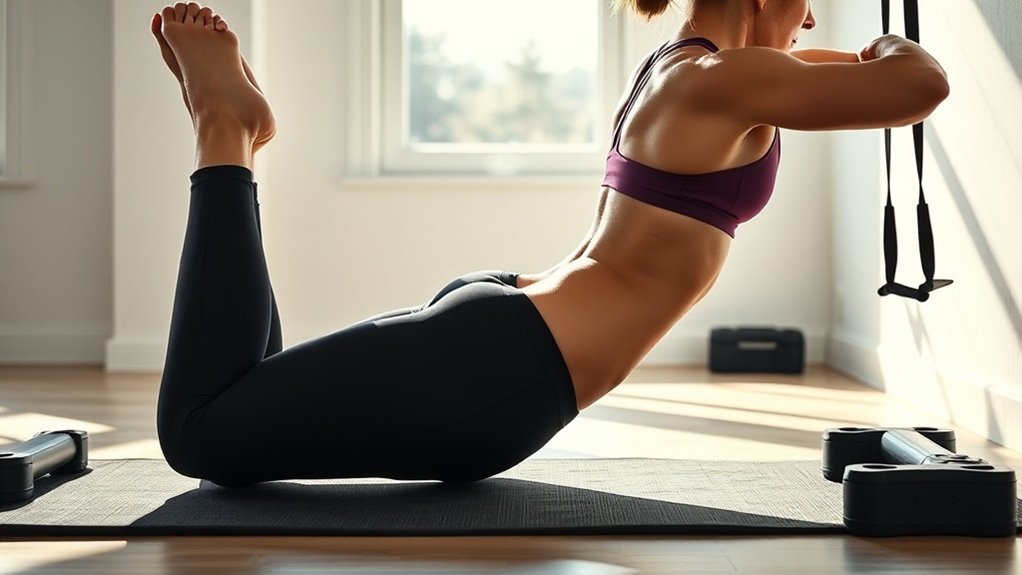
Pelvic muscle strength is essential for performance across sports and daily activities, yet many athletes overlook the pelvis as a source of power and stability. You’re aiming to improve both force transmission and control, so you’ll want to prioritize evidence-based activation patterns that translate to real-world performance. Start with an assessment mindset: identify baseline endurance, bracing capacity, and timing of pelvic movements during common tasks like squats, lunges, and single-leg drills. Your objective is not to fatigue tissues unnecessarily but to build reliable neuromuscular control that supports efficient movement and injury prevention.
Pelvic activation basics for stable, powerful movement start with assessment and neuromuscular control.
Pelvic endurance refers to the ability to maintain stable pelvic posture and control under fatigue or repetitive loading. You’ll train this by integrating pelvic floor and trunk activation with dynamic movement, ensuring the pelvis remains aligned as loads rise. Begin with low-load, high-quality repetitions, emphasizing controlled descent and ascent, and progress to multi-planar tasks that challenge both endurance and coordination. Throughout your sessions, cue yourself to maintain a neutral spine, breathe diaphragmatically, and sustain gradual core engagement without excessive bracing that can restrict ventilation or movement.
Core bracing is the deliberate engagement of the abdominal, back, and pelvic muscles as a cohesive unit to stabilize the spine and pelvis during loading. You’ll apply it in a way that supports performance without creating stiffness or compensatory strategies. Practice harmonizing bracing with hip and thigh drive, ensuring the pelvis remains stable while limbs generate force. Techniques include situational bracing: light, mindful engagement during warmups; a steadier, comprehensive brace during heavier efforts; and deliberate relaxation between sets to preserve mobility and tissue resilience. The goal isn’t rigidity but controlled stiffness that permits powerful, efficient movements.
For programming, structure sessions around a progression from foundational activation to integrated, performance-specific loading. Start with floor-based or semi-supported drills that emphasize breath-guided activation of the pelvic floor and transversus abdominis, coupled with subtle hip abductor and pelvic stabilizer engagement. Move to functional patterns such as split squats, step-downs, and resisted hip hinges while maintaining neutral alignment and controlled trunk stiffness. Use tempo to train endurance: slower eccentric phases followed by a controlled concentric push, then brief pauses to re-center the pelvis.
Monitor training quality with objective cues: pelvis stays level in the frontal plane during bilateral tasks, and there’s no unwanted lumbar arching or pelvic tilt under load. Volume should progress gradually to avoid overload of fascia, joints, and neural structures. Recovery matters; schedule rest days and incorporate mobility work for the hips, lower back, and pelvis to sustain long-term performance gains. In practice, your aim is to connect pelvic endurance and core bracing into every movement, so you transfer stability into power, speed, and resilience across sports and life.
Common Questions
Can Pelvic Training Improve Non-Athletic Daily Function?
Yes, pelvic training can improve non-athletic daily function. You may notice better core stability, continence, and posture during daily living tasks. Evidence suggests that targeted pelvic floor and hip stability work enhances intra-abdominal pressure control, which supports safe lifting and reduces fatigue. Consistency matters; integrate short, progressive sessions. Track symptoms of urinary or bowel control, pelvic pain, or incontinence. If pain or dysfunction arises, consult a clinician for individualized, evidence-based guidance.
Are There Age or Gender Considerations for Pelvic Exercises?
Yes, there are age considerations and gender differences to note. As you age, pelvic floor muscles may weaken, so training intensity and volume should start conservatively and progress gradually. Women may experience stronger benefits postnatally, while men might focus on core-supported stability differently. Consider baseline screening for prolapse, incontinence, or pelvic pain. Exercise plans should accommodate hormonal changes, comorbidities, and individual anatomy, ensuring breath coordination and gradual progression for safe, effective improvement.
How Long Until You See Pelvic Muscle Strength Gains?
Patience is your ally: how long until you see pelvic strength timing gains varies, but most people notice measurable improvements in 4–8 weeks with consistent training. You should track progress with targeted exercises, gradually increasing resistance and repetitions. Expect subtle changes first, then clearer control and endurance. Keep form strict, avoid Valsalva, and stay hydrated. If you don’t improve after 8–12 weeks, reassess technique or seek guidance from a clinician specializing in pelvic health.
Can Pelvic Workouts Cause Hip or Back Pain?
Yes, pelvic workouts can cause hip or back pain in some people. You may experience pelvic pain if you overstrain, use poor form, or have preexisting conditions. Pain causes often relate to muscular imbalances or nerve irritation. If you notice sharp, persistent, or increasing pain, stop and seek evaluation. Use correct technique, gradual progression, and muscle activation routines. Monitor symptoms, adjust intensity, and consider professional guidance to reduce risk and protect your spine and hips.
Do Pelvic Muscles Affect Core Stability or Posture?
Yes. Pelvic muscles affect core stability and posture. You’ll find that pelvic engagement supports spinal alignment and transfer of forces between upper and lower body, reducing compensations that harm posture. Strong, coordinated activation improves endurance for daily tasks and performance. However, isolated training isn’t enough—integrate breath-supported contractions with foundational core exercises. If you notice pain, adjust technique, frequency, and load. Consistent, evidence-based practice optimizes posture impact without overload.